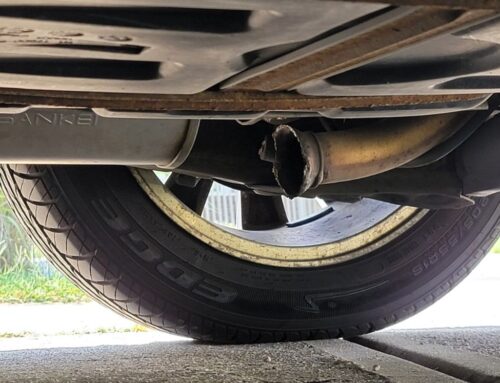

You hear your car growl louder than usual. You’re wondering if that missing or broken muffler is a big deal, or just noise.
Here’s the truth: that sound could cost you more than just attention on the road. It could lead to fines, damage, and even health risks. That’s where this guide comes in.
Can You Drive Without A Muffler?
Yes, but it’s not safe or legal in many areas. Driving without a muffler increases harmful emissions, creates excessive noise, and exposes you to toxic fumes. You also risk fines, poor fuel economy, and long-term engine damage.
Can You Drive Without A Muffler – A Short Answer
The short answer is yes, your car can still run without a muffler. But that doesn’t mean it should.
Once the muffler is removed, your vehicle becomes loud, non-compliant, and unsafe. You’re not just pushing legal boundaries, you’re also risking health problems from fumes and inviting costly wear on your engine.
In Arizona, noise restrictions are strict, and failing to meet them can lead to penalties or a defect notice.
Even worse, insurers might cancel your policy if your exhaust system no longer matches what’s legally required.
So while your car might feel more aggressive, it comes with serious downsides that are hard to ignore.
Trust Apache Muffler – Phoenix’s Go-To Experts for Muffler Repair and Replacement
If you’re in Phoenix, Arizona, and your vehicle sounds louder than usual, don’t wait for it to turn into a costly problem.
At Apache Muffler, we specialize in quick, reliable muffler repairs that keep your car running smoothly and legally.
Our team has decades of hands-on experience, and we treat every car like it’s our own.
Whether you need a minor fix or a full exhaust system overhaul, we’re ready to help with honest advice and fair pricing. Locals trust us because we get the job done right, the first time.
Call us at (480) 964-9272 or visit our Contact Us page to book your appointment today.
Is It Safe to Drive Without a Muffler?
Driving without a muffler is not safe. The muffler is designed to reduce the noise produced by the engine’s exhaust gases and to direct these gases safely out of the vehicle. Without it, the exhaust system can release harmful gases like carbon monoxide into the cabin, increasing the risk of inhalation.
Moreover, the absence of a muffler can lead to excessive noise levels, which can be distracting to the driver and disturbing to others. In some cases, the loud noise can mask important sounds from the vehicle or environment, potentially leading to accidents.
What Are the Risks of Driving Without a Muffler?
Operating a vehicle without a muffler poses several risks, ranging from legal consequences to health hazards. Understanding these risks can help you make informed decisions about vehicle maintenance and modifications.
1. Legal Consequences
Driving without a muffler is against the law in most regions. Arizona’s road laws are strict when it comes to vehicle noise and pollution. If your car exceeds noise limits, commonly set around 90 decibels, you could be fined on the spot or receive a defect notice.
Officers can issue penalties even if your vehicle is parked and just being started. This is because the law focuses not only on moving vehicles but also on vehicles that pose a public disturbance or environmental concern.
Modifying or removing the muffler without proper approval may also breach your vehicle compliance standards.
In some states, failing to meet those standards means your car could be declared unroadworthy.
That brings further consequences; your registration could be suspended, or your insurance may be voided in case of an accident. A minor change can spiral into legal trouble if you’re not careful.
2. Health Risks from Exhaust Fumes
Your muffler isn’t just for noise, it also directs toxic exhaust gases safely away from the vehicle cabin.
When you drive without it, gases like carbon monoxide, nitrogen oxides, and hydrocarbons can leak toward the passenger area.
Even with open windows, you’re still at risk of inhaling these harmful fumes. Exposure to carbon monoxide, in particular, is extremely dangerous as it’s both colorless and odorless.
Symptoms of carbon monoxide poisoning include dizziness, nausea, and confusion. If you’re stuck in traffic or idling in a garage, the buildup becomes even more severe.
In worst-case scenarios, people have lost consciousness or suffered long-term damage from prolonged exposure. Without a functioning muffler, your health and the health of your passengers are at risk every time you drive.
3. Increased Noise Pollution
When the muffler is removed, your engine noise no longer passes through a system designed to quiet it down. This means your car roars much louder than normal, especially during acceleration, deceleration, or gear shifts.
That kind of noise might sound thrilling for a few moments, but it’s a major contributor to urban noise pollution.
In residential areas or city centers, loud vehicles are a major nuisance. Neighbors can file complaints.
Police can issue warnings or fines. And if your vehicle regularly disturbs the peace, you could end up with a court order or face more severe penalties.
Loud vehicles don’t just disrupt human life; they also disturb animals and interfere with hospital zones, schools, and aged care facilities. In short, removing your muffler creates noise that impacts more than just your ears.
4. Potential Damage to the Vehicle
The muffler isn’t a stand-alone part. It works in harmony with your engine and the rest of the exhaust system to manage flow and pressure. Removing it breaks that balance.
Without proper backpressure, your engine won’t operate at peak efficiency. Over time, this imbalance can lead to wear and tear on pistons, valves, and even the catalytic converter.
You might also experience rattling sounds, underbody vibrations, or engine misfires. That’s because a missing muffler causes the system to release exhaust in unpredictable ways.
This can trigger sensor errors, dashboard warnings, or even damage your oxygen sensors. What seems like a small modification can reduce your vehicle’s lifespan and increase your maintenance bills significantly.
5. Reduced Fuel Efficiency
You might not notice it right away, but driving without a muffler often leads to poor fuel economy. That’s because the vehicle’s engine control unit (ECU) relies on pressure data from the exhaust system to regulate fuel flow.
Without a muffler, those readings can be skewed, resulting in the engine injecting more fuel than necessary.
This not only increases your day-to-day fuel costs, but it also hurts your car’s environmental footprint.
A car running rich burns more fuel and releases more pollutants. It also leads to quicker clogging of your fuel injectors and air filters, which creates further performance issues over time.
6. Negative Impact on Emissions
A healthy muffler works alongside the catalytic converter to control harmful emissions from your vehicle.
It helps guide the flow of gases so that the converter can break down toxic elements like carbon monoxide, volatile organic compounds (VOCs), and nitrogen oxides before they leave the exhaust pipe. Removing the muffler weakens this system.
Without the right flow and pressure, the catalytic converter may not operate efficiently. This can cause your car to fail emissions testing, and in regions where regular inspections are mandatory, that failure means costly repairs and re-inspections.
Worse, your vehicle will release more pollutants, increasing your contribution to air pollution and harming the environment.
7. Potential for Increased Insurance Premiums
Many insurers treat exhaust modifications, including the removal of a muffler, as major alterations to the vehicle.
If you don’t disclose these changes, your insurer might classify it as non-compliance, potentially denying claims after an accident.
Even if you inform them, the modification can lead to higher premiums or exclusion clauses in your policy.
Insurance companies assess risk based on vehicle condition, safety, and legal compliance. A car without a muffler often falls short in all three areas.
It’s louder, potentially illegal, and more likely to cause or be involved in mechanical failure. If an accident occurs and the modification is considered a factor, your cover could be reduced or cancelled altogether.
Summing Up
A missing muffler does more than just make noise, it disrupts your vehicle’s safety, performance, and legal status.
From increased fuel costs and toxic fumes to fines and insurance headaches, the risks stack up fast.
You might think it’s a harmless modification, but it creates real issues that affect your wallet, your safety, and your driving record.
Staying compliant with exhaust standards protects more than just your car; it safeguards everyone around you.
If your muffler is damaged or removed, it’s time to take it seriously. The cost of ignoring it will always be louder than the sound it makes.