
Most drivers don’t think about the muffler until it gets loud, rattles, or smells odd.
A worn or damaged muffler doesn’t just disrupt your peace; it affects fuel use, engine health, and even safety.
If you’re hearing more noise than usual, it could be time to look deeper into what’s really going on under your car.
What’s Inside A Muffler?
Inside a muffler, you’ll find a series of pipes, chambers, and sound-dampening materials that reduce engine noise by breaking up and absorbing sound waves before they exit the exhaust.
What’s Inside A Muffler – A Quick Answer
A muffler holds more than metal, it’s packed with smart design. Inside, there’s an inlet pipe that directs gases from the engine, perforated tubes that scatter sound waves, and chambers that push those waves to bounce and cancel each other out.
It also contains sound-absorbing materials that soak up high-pitched noise and baffles that slow the flow just enough to keep it quiet without hurting performance.
Every part works together to turn engine chaos into a clean, low hum. Think of it as noise control wrapped in steel.
Need Muffler Help in Phoenix? Trust the Experts at Apache Muffler
If your car’s getting louder or your fuel economy’s slipping, don’t wait for a bigger problem.
Apache Muffler has served Phoenix, Arizona drivers with expert muffler repair and replacement for years.
We know the desert heat, the road conditions, and what your vehicle needs to stay quiet and efficient.
Our team uses quality parts, fast diagnostics, and honest advice you can count on. Whether it’s a small fix or a full muffler replacement, we’ve got you covered with top-notch service that fits your schedule.
Call us today at (480) 964-9272 or visit our Contact Us page to book your appointment.
Key Parts Inside a Muffler
A muffler isn’t just a hollow tube inside, it’s a smartly designed system of chambers, pipes, and materials all working together to reduce engine noise and manage exhaust flow. Each part has a specific job and supports the whole system.
Inlet Pipe
The inlet pipe is where the exhaust gases first enter the muffler. It’s connected directly to the engine’s exhaust manifold. This pipe takes the hot, noisy gases from the combustion process and channels them into the muffler.
Because these gases are under pressure, the inlet pipe needs to be durable and heat-resistant.
It’s often made from stainless steel or aluminized steel to resist corrosion. From here, gases begin their journey through the sound-suppressing system.
Resonator Chamber
This part fine-tunes the noise. A resonator is typically placed before or inside the muffler. Its job is to cancel out certain sound frequencies by bouncing sound waves back against each other; this is known as destructive interference.
The result? That deep, controlled hum you hear instead of a harsh roar. In many modern vehicles, the resonator works hand in hand with the muffler to meet sound regulations while enhancing engine tone.
Perforated Tubes
Inside the muffler, you’ll often find perforated tubes. These are metal pipes with holes drilled along the surface.
Exhaust gases pass through them while the holes allow sound waves to expand into the surrounding chambers.
As the sound waves bounce, they begin to cancel each other out. This technique dramatically reduces engine noise without blocking the flow of exhaust gases. It’s an efficient solution that balances quiet operation with engine performance.
Sound-Absorbing Materials
Many mufflers include sound-dampening material, usually made from fiberglass or steel wool. These materials sit between the inner and outer walls of the muffler body.
When sound waves hit these materials, much of the energy is absorbed and turned into heat. This step is especially important for taming high-pitched sounds. It adds another layer of silence without disrupting the exhaust flow.
Baffles and Chambers
Baffles are internal walls that direct and slow down the exhaust gases. They force the gases to change direction multiple times inside the muffler, which reduces their energy and noise.
As gases hit these walls, sound waves are broken up and quieted. Chambers between the baffles give space for gases to settle and noise to fade. This system is key to producing the controlled, muffled sound you expect from a healthy vehicle.
How a Muffler Works?
The inside of a muffler might seem like a maze, but it’s a calculated design built to quiet sound, manage pressure, and improve emissions control.
When exhaust gases exit your engine, they’re moving fast and loud. The muffler’s inlet pipe gathers these gases and routes them into the internal system. Once inside, the gases meet perforated tubes, chambers, and baffles that work together to cancel and absorb sound waves.
Each sound wave collides with other waves, reflective surfaces, and sound-dampening materials. The result is destructive interference, where the wave peaks cancel out other waves’ troughs, reducing volume.
At the same time, the resonator chamber eliminates annoying, high-frequency tones. The exhaust gases continue through the outlet pipe and out of your vehicle, much quieter than when they started.
All of these parts work as one unit. They don’t block gases; they guide and manage them. That’s why a damaged muffler doesn’t just sound louder, it can make your engine struggle and even raise emissions.
Types of Mufflers
Not all mufflers are built the same. Depending on your car, driving style, and local noise laws, you’ll find several designs available. Each one uses a different internal setup to shape sound and flow.
Chambered Mufflers
These use a series of baffles and chambers to reflect and cancel sound waves. You’ll often find them in muscle cars and V8s, where a deeper rumble is desired. They provide a controlled sound while maintaining good airflow.
Chambered mufflers are ideal for drivers who want performance tone without excessive noise. They’re reliable, durable, and widely available in the aftermarket.
Turbo Mufflers
Turbo mufflers use a more complex path of S-shaped tubes to guide gases. This setup increases the time it takes for gases to exit, helping reduce sound further.
While they don’t flow as freely as other types, they strike a solid balance between quiet operation and moderate power. They’re a good fit for everyday drivers who value comfort.
Straight-Through (Glasspack) Mufflers
These feature a single, perforated tube wrapped in sound-absorbing fiberglass. The straight path allows for excellent exhaust flow, which appeals to performance drivers.
However, they’re louder than other designs. In places like Phoenix, Arizona, where regulations are strict, a glasspack muffler might be too noisy for city driving.
Performance Mufflers
Built for high-flow exhaust systems, these mufflers are made to reduce back pressure while shaping a more aggressive sound. They use lightweight materials and custom internal designs.
Performance mufflers are ideal for tuned vehicles, but may require adjustments to remain compliant with local sound rules. They’re often seen on turbocharged or modified engines.
Stock Mufflers (OEM)
Original equipment mufflers focus on durability, noise reduction, and emissions compliance.
They’re designed by car manufacturers and often include both a muffler and a resonator system.
If you prioritize quiet driving and don’t need added power or sound, stock mufflers offer long-term reliability and low maintenance.
4 Signs Your Muffler May Be Failing
Even the best muffler wears out over time. Heat, moisture, and road salt all take their toll. Here’s how to tell when it’s time for a repair or replacement.
Louder Engine Noise
If your car sounds noticeably louder, especially during acceleration, the muffler may have a hole or rust damage. This is often the first and most obvious sign.
You might also hear a deeper, harsher tone that gets worse over time. Ignoring it can lead to more damage to your exhaust system.
Rattling Under the Car
A loose muffler or broken baffle inside can cause a metallic rattling sound. You’ll hear it most while idling or going over bumps.
Sometimes, the brackets holding the muffler in place break, letting it hang or shift during driving. This needs immediate attention to avoid dragging or full detachment.
Drop in Fuel Efficiency
When a muffler becomes clogged or damaged, your engine works harder to push out gases. That added strain means you’ll burn more fuel.
If your mileage drops for no clear reason, have your exhaust system inspected. A failing muffler might be the root cause.
Visible Rust or Damage
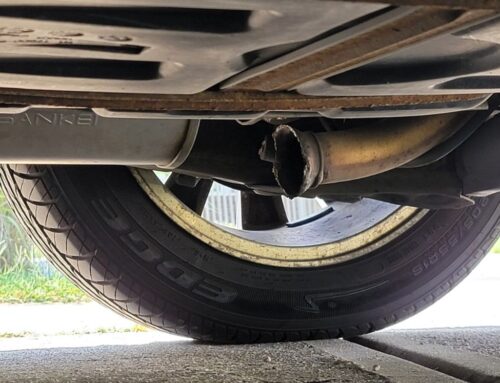
Look under your car, if you see rust spots, cracks, or holes on the muffler, it’s compromised. Rust not only weakens the material but also allows harmful gases to escape near the cabin.
Exhaust leaks are dangerous. If you spot damage, take your vehicle to a trusted mechanic right away. Don’t wait until you smell fumes or hear a loud pop.
Summing Up
Understanding what’s inside a muffler gives you more than car trivia; it puts control in your hands.
A quiet ride means the system is working. A louder one warns you something’s off. By learning how the parts function, you know when to ask questions, spot early signs of wear, and talk confidently to your mechanic.
Whether you’re cruising through Phoenix or stuck in traffic, a healthy muffler keeps your drive smooth, clean, and quiet, just the way it should be.