
Most drivers only think about the muffler when it starts making noise. But knowing where it’s located and what it does can save you from costly repairs. Ignoring signs of muffler trouble puts your engine, safety, and even your wallet at risk.
Where Is The Muffler On A Car?
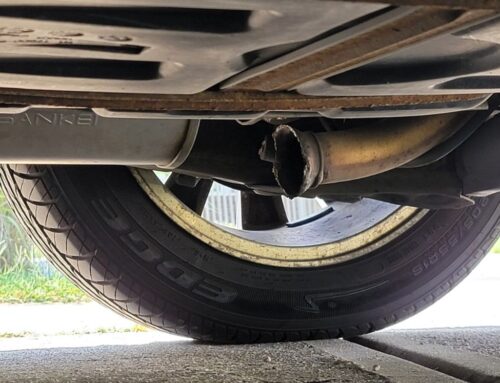
The muffler is located underneath the rear section of the vehicle, connected to the exhaust system near the tailpipe. It reduces engine noise and channels exhaust gases safely out. You’ll usually find it close to the rear axle, mounted horizontally.
Where Is The Muffler On A Car – A Quick Answer
The muffler sits at the back end of your vehicle, just below the rear bumper, and is connected to the exhaust pipe.
It looks like a rounded metal canister and is usually placed behind the rear axle. Its job is to soften engine noise and push fumes out safely.
You’ll spot it if you crouch and look underneath the back of your car. If you’re unsure, just trace the exhaust pipe from the front or center of the vehicle toward the back; the muffler is the last major piece before the tailpipe.
Every car has one, and its placement may vary slightly depending on make and model, but it’s always part of the lower rear exhaust layout.
Trust Apache Muffler in Phoenix, Arizona for Reliable Muffler Repairs
If you’re in Phoenix and your car sounds louder than usual, it’s time to let the experts at Apache Muffler take a look.
We’ve been helping local drivers with honest, fast, and high-quality muffler repairs for years.
Whether it’s a small leak or a full replacement, our team handles it with precision and care.
You’ll drive away with a quieter car and peace of mind. Don’t wait until minor noise turns into major damage. Locals trust us, and so can you.
Call us today at (480) 964-9272 or visit our Contact Us page to book your appointment.
How To Locate The Muffler In A Car?
The muffler is typically situated underneath the rear part of the vehicle, connected to the exhaust pipe. It resembles a large, cylindrical or oval-shaped metal container. To locate it:
- Ensure Safety: Park the car on a flat surface, turn off the engine, and allow it to cool.
- Use Proper Equipment: Employ a jack and jack stands to safely lift the vehicle.
- Inspect Underneath: Look beneath the rear section of the car; the muffler is connected to the exhaust pipe and may have one or more tailpipes extending out the back.
- Identify the Muffler: It is usually a metal box with an inlet and outlet pipe, mounted horizontally.
When Do You Need to Inspect the Muffler?
Regular inspection of the muffler is crucial to ensure your vehicle operates efficiently and safely. Here are common scenarios that warrant a check:
- Unusual Noises: If your car suddenly sounds louder or you hear rattling under the vehicle, the muffler could be loose, cracked, or damaged. These sounds are early warnings that shouldn’t be ignored.
- Decreased Fuel Efficiency: A failing muffler disrupts airflow, forcing the engine to work harder and burn more fuel. You may notice you’re filling up more often than usual.
- Visible Rust or Holes: Surface rust can turn into deep corrosion, weakening the muffler and leading to leaks. Regular inspections can catch this before it turns costly.
- Foul Odors: Smelling exhaust fumes in the cabin is a serious sign of a leak in the muffler or exhaust system. This is a health risk and needs urgent attention.
- Poor Engine Performance: A clogged or broken muffler restricts exhaust flow, reducing power and making the engine feel sluggish. It may even affect gear shifts and acceleration.
- Failed Emissions Test: If your car fails an emissions test, a faulty muffler might be the cause. It could be leaking or not filtering emissions properly.
- Excessive Condensation: Water dripping from the tailpipe constantly may signal internal rust or muffler damage. This often leads to holes or performance loss.
- Age of the Muffler: Most mufflers last 5 to 7 years. Over time, heat, moisture, and road debris break them down, so regular inspections help avoid sudden failures.
Signs of a Damaged Muffler
Identifying a damaged muffler early can prevent more serious vehicle issues. Here are key signs to watch for:
1. Loud Exhaust Noise
If your car suddenly gets louder, the muffler might be cracked or broken. A damaged muffler can’t control noise properly, leading to a deep growl or harsh sound from the exhaust.
In some areas, this can also result in fines for noise violations. Over time, a loud exhaust can become more than just annoying, it can signal more serious internal damage. If you hear unusual sounds, don’t ignore them.
Solution: Check for any visible cracks, holes, or loose fittings around the muffler. Visit a trusted mechanic for repair or full replacement if needed.
2. Reduced Fuel Efficiency
Noticing that you’re filling up more often? A faulty muffler can increase backpressure, forcing your engine to work harder. This extra strain reduces fuel efficiency and hurts long-term engine health.
You might not feel it right away, but you’ll see the impact on your wallet. Driving with this issue for too long can lead to further problems in the exhaust system.
Solution: Track your fuel usage week to week. If consumption rises without changes in driving habits, get the exhaust system checked.
3. Bad Odors Inside the Vehicle
Smelling fumes inside your car is a major red flag. A leaky muffler can allow exhaust gases, especially carbon monoxide, to seep into the cabin.
Even in small amounts, this gas can be dangerous. Don’t take risks with your health or your passengers’. If there’s a constant or sudden foul smell, act quickly.
Solution: Stop driving right away and contact a qualified technician. Have the system inspected thoroughly for leaks and seal failures.
4. Visible Rust or Holes
Rust is a slow but steady enemy of your muffler. Moisture and road salt speed up corrosion, eating through the metal.
Small holes can form without being seen immediately, leading to bigger issues later. If rust spreads, the muffler can weaken and fall apart, affecting performance and safety.
Solution: Get under the car or have a mechanic inspect for rust spots. Replace the muffler if it shows signs of structural wear.
5. Engine Misfires or Poor Performance
A faulty muffler doesn’t just affect sound, it can upset your engine’s balance. When backpressure builds up incorrectly, it disrupts exhaust flow.
This can cause engine misfires, lower acceleration, and a sluggish driving experience. Left unchecked, it may damage the catalytic converter.
Solution: Let a professional evaluate the muffler and full exhaust setup. Adjustments or replacements will restore smooth performance.
6. Excessive Condensation
Water vapor is a normal by-product of combustion, but if you see water dripping constantly, it may point to internal muffler issues.
Over time, trapped moisture leads to rust and small leaks. These leaks reduce performance and increase the risk of failure.
Solution: If dripping is frequent and steady, ask your mechanic to check for moisture buildup or early signs of rust inside the muffler.
Wrapping It All Up
Knowing where the muffler is and spotting early signs of damage can save you from bigger problems down the road.
A well-functioning muffler means quieter rides, better fuel use, and safe ventilation of exhaust gases. Whether you hear strange noises, smell something off, or notice rust, it’s worth checking the muffler without delay.
Regular inspections and a quick visual check from underneath can keep your car running smoothly and quietly. Don’t wait for the problem to get worse, your muffler works harder than it looks.